
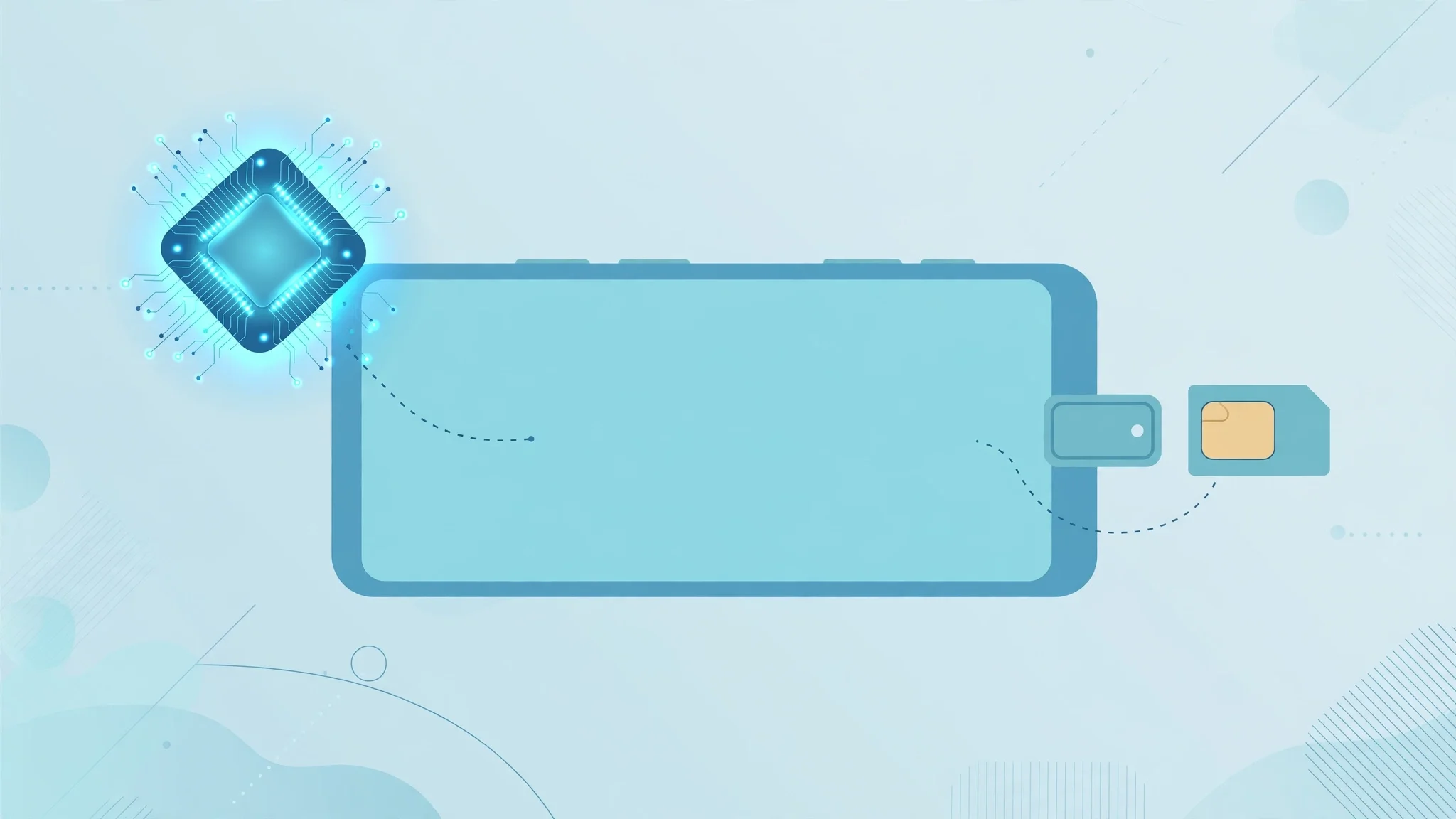
eSIM and physical SIM cards both connect phones to cellular networks, but their installation and management differ. A physical SIM is a small card inserted into a device slot, while an eSIM is a digital SIM profile embedded in the device and activated through a carrier. Understanding these differences helps you choose the option that best fits your habits, device, and travel needs.
What is a physical SIM?
A physical SIM is a card that stores subscriber identity to access a carrier’s network. Users typically obtain the card from a carrier, insert it into the SIM slot, and follow any required activation process. When switching phones, the card can be moved to another compatible device, provided the card size and carrier terms match.
The main advantage is its familiar, easy-to-understand usage. Cards can also be transferred without downloading a new profile. However, cards can be lost, damaged, or removed from the device. Phones with only one physical SIM slot may also limit dual-number usage.
What is an eSIM and how does it work?
An eSIM is an embedded SIM module that supports digital storage of carrier profiles. To activate it, users typically scan a QR code, use an official carrier app, or follow another activation process provided by the carrier. Once the profile is installed, the device can connect to the network just like with a physical SIM.
eSIM does not mean your phone number is stored on the internet without protection. Profiles are managed through carrier and device-compatible mechanisms. eSIM support varies by phone model, sales region, firmware, and carrier. Therefore, don’t rely solely on the phone series name; check the exact model specifications and carrier compatibility lists.
Key differences between eSIM and physical SIM
- Installation: Physical SIM is inserted into a slot, while eSIM is activated digitally.
- Device switching: Physical SIM usually just needs to be moved. eSIM may require a transfer process, deletion of the old profile, or reactivation from the carrier.
- Multiple numbers: Certain devices can store multiple eSIM profiles or combine eSIM and physical SIM, but the number of stored profiles doesn’t always equal the number of simultaneously active numbers.
- Durability: eSIM cannot be dropped or damaged as a separate card. However, device damage or carrier account issues can still disrupt access.
- Availability: Physical SIM is still widely supported, while eSIM depends on device compatibility and carrier service.
Which is more secure?
Both can be used safely if carrier accounts and devices are properly protected. eSIM reduces the risk of someone physically removing a card from your phone. However, eSIM is not absolute protection against number takeover. Scammers may still attempt social engineering against customer service or hijack carrier accounts to transfer service.
Physical SIM also carries risks, such as theft followed by use on another device if adequate protection isn’t in place. Whichever you choose, enable SIM PIN if available, use a strong screen lock, protect your carrier account with additional authentication, and be wary of messages requesting verification codes. For important accounts, use authenticator apps or security keys if the service supports them, rather than relying solely on SMS. Also learn about how passkeys work for more secure login and digital habits for keeping accounts secure.
When should you choose eSIM?
eSIM suits users who travel frequently, want to add data plans while abroad, or need two numbers on a supported device. Digital activation can reduce the need to find stores or swap cards, but ensure purchased packages come from trusted providers that explain validity, data allowance, coverage, and voice/SMS support.
eSIM also appeals to those wanting to reduce dependence on easily removable cards. Conversely, if you frequently switch phones, use older devices, or live in areas with limited eSIM support, physical SIM may be more practical.
Checklist before switching to eSIM
- Check whether your exact device model supports eSIM in the region where it was purchased.
- Ensure your carrier provides eSIM for your plan type and number.
- Read instructions for transferring profiles when switching phones. Don’t delete old profiles before knowing how to recover them.
- Make sure your carrier account has a unique password and accessible recovery methods.
- Save activation information according to carrier instructions and don’t share QR codes or activation codes with others.
- If your number is used for banking or account recovery, understand the SIM replacement and number recovery process first.
Conclusion
eSIM offers digital activation and flexibility for compatible devices, while physical SIM excels in ease of moving cards between devices. Neither choice is universally best for everyone. Check device support, carrier policies, travel needs, and account recovery steps before deciding. Security ultimately depends on protecting carrier accounts, devices, and user habits.
Leave a comment